Hindu education

The Vedic religions, Buddhism, and Jainism share a regional culture located around northeastern India. Ancient India had two main schools of thought: the Shramana religions and the Vedic religions (the latter continuing today in Hinduism).

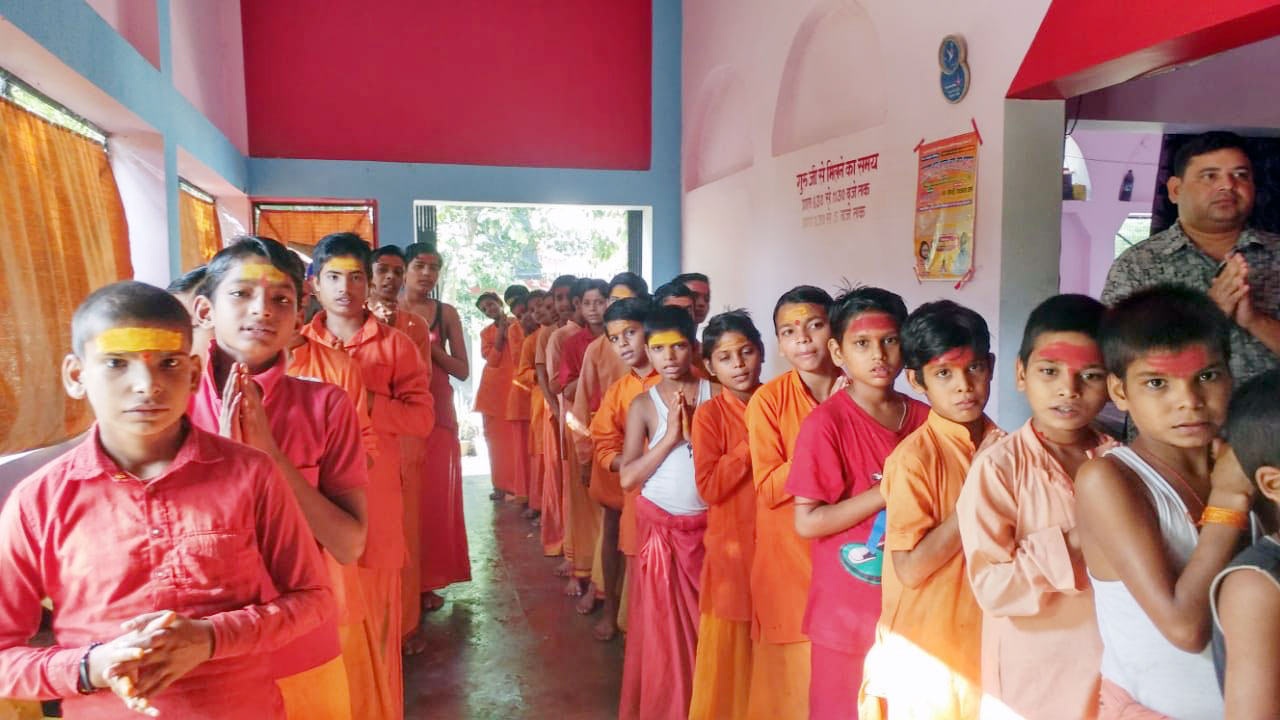
When a family wishes for their son to become a Hindu priest, they know they must send him to a monastery to attain knowledge by studying Vedic Sanskrit, the language in which the Rigveda (India’s oldest text, composed orally from the mid-second millennium BCE) was written. Vedic Sanskrit has been preserved orally as part of the Shrauta Vedic chanting tradition.

Thus they acquire knowledge of the supreme and eternal connection of the soul.

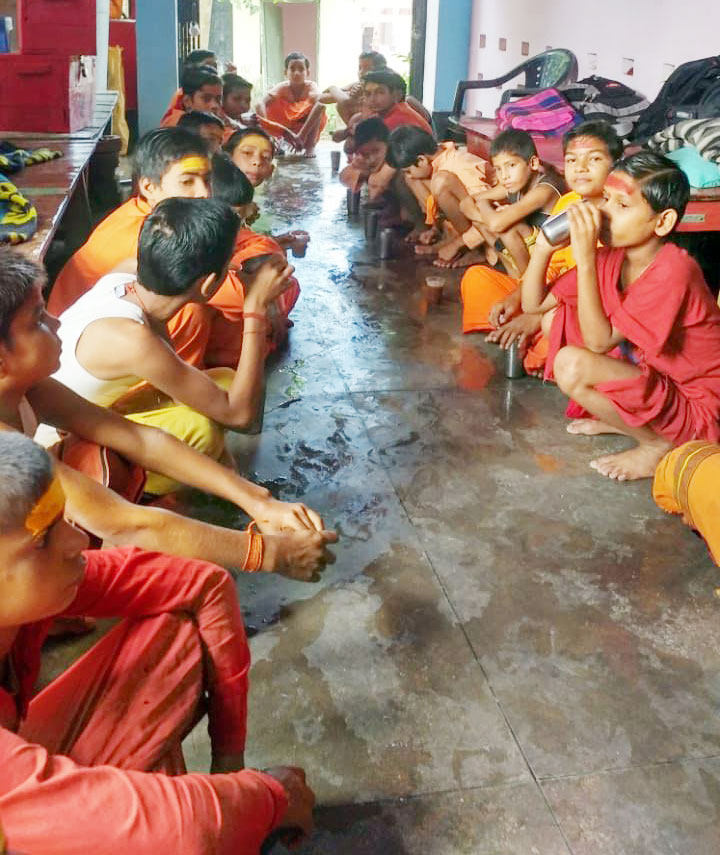
At the Monastery, novice students find cheap accommodation that includes food, but they will have to study and work at the monastery most of the time.

It is not easy for the children: when they enter the monastery they must adopt its discipline, wear monk’s robes and also shave part of the hair on the back of their head as a symbol of Hinduism.

Furthermore, the children live in the monastery separated from their families; their parents only visit them on rare occasions, although during the summer holidays they can return to their parents.

The student’s routine includes waking up very early, around 4 or 5 in the morning, and working on the monastery’s maintenance tasks: cleaning, cooking, washing clothes, and even giving massages to the older monks, who also study at the monastery. This is known as Seva Karama (Physical Service).

There is little time for play; the rest of their time is devoted to study, both Sanskrit and primary and secondary education according to their age. When a student finishes their studies, they can choose to remain in a monastery or attend university for higher education.

In the future, these children will become Hindu priests who will help others achieve spirituality.

Hindus consider life to be divided into four periods: up to age 25 is considered the stage of learning and education; from 25 to 50 years is the time of love and marriage to generate new life; from 50 to 75 years is the period of spirituality; and from 75 years onwards is the practice of liberation.

Leave a Reply

Your email address will not be published. Required fields are marked *